Cleanliness plays a major role in how a commercial kitchen operates day to day. In food service environments, cleaning isn’t just about appearances. It affects food safety, staff confidence, inspections, insurance requirements and how long your equipment lasts before it needs replacing.
Restaurants, cafes, pubs, takeaways and contract caterers all deal with the same pressures. Kitchens get hot, busy and messy very quickly. Grease builds up faster than expected, food waste spreads easily, and small missed areas can turn into bigger problems over time if they’re not dealt with early.
In this guide, we share practical advice on commercial kitchen cleaning, from everyday routines to how often different areas should be deep cleaned, along with the type of commercial kitchen cleaning equipment commonly used to maintain hygiene standards.
Why commercial kitchen cleaning matters
Most hygiene issues don’t start with one obvious mistake. They build up gradually. A rushed end-of-day clean, a corner that gets skipped regularly, or equipment that’s awkward to clean properly can all contribute.
Over time, grease collects on surfaces and inside ventilation systems, food debris attracts pests, floors become slippery and equipment doesn’t perform as it should. These issues don’t just affect inspections, they make kitchens harder and less safe to work in.
Environmental Health Officers look for consistency rather than perfection. They want to see that cleaning is part of normal operations, not something that only happens when an inspection is due. For businesses that care about maintaining a good food hygiene rating, cleaning routines need to be realistic and easy for staff to follow during busy services.
How often should a commercial kitchen be cleaned?
There isn’t a single cleaning schedule that suits every kitchen or caterer. However, most professional kitchens follow a structured routine that breaks cleaning into daily, weekly and deep cleaning tasks. This helps spread the workload and makes it easier to spot when something has been missed.
Daily commercial kitchen cleaning
Daily cleaning focuses on food contact surfaces, visible hygiene and immediate safety risks. These tasks are usually carried out throughout the day rather than being left until closing time.
- Clean and disinfect worktops and food preparation surfaces
- Wash chopping boards, utensils and small equipment
- Clean sinks, taps and surrounding areas
- Wipe down cooking equipment exteriors
- Empty bins and replace liners
- Deal with spills as soon as they happen
- Sweep or scrub floors when needed
Leaving daily cleaning until the end of the shift often leads to rushed jobs and areas being overlooked, which can cause problems the following day.
Weekly commercial kitchen cleaning
Weekly cleaning tasks help prevent grease and dirt from building up in less obvious areas. When weekly routines slip, kitchens can fall behind quickly.
- Clean walls, doors and splashbacks
- Degrease equipment surfaces thoroughly
- Clean inside fridges, freezers and dry storage areas
- Wash floor edges, corners and drains
- Clean ventilation filters
These tasks take more time but are much easier to manage when done regularly.
How often should a commercial kitchen be deep cleaned?
Deep cleaning covers areas that staff don’t usually reach during normal shifts. This includes behind and underneath equipment, high-level surfaces and parts of the ventilation system.
Most commercial kitchens need a deep clean every few weeks. High-volume kitchens, particularly those using fryers or handling raw meat, often require deep cleaning more frequently. Food Safety Authority of Ireland guidance and inspection history should always be considered when setting schedules.
How often do commercial kitchen hoods need to be cleaned?
Kitchen hoods and extraction systems are a common source of inspection issues. Even when the canopy looks clean, grease continues to build up inside filters and ducting.
As a general guide, heavy-use kitchens should clean hoods every 1-3 months, while moderate-use kitchens every 3-6 months. Filters usually need cleaning weekly, and sometimes more often during busy periods. Poor hood maintenance increases fire risk and is difficult to justify during an inspection.
All food businesses must have a HACCP-based food safety management system,
How to clean food preparation areas
Food preparation areas require the highest hygiene standards because mistakes here directly affect food safety. These areas include worktops, prep tables, sinks, shelving, splashbacks and sealant joints.
Steam cleaning is commonly used in food prep areas because it sanitises surfaces without chemicals. High-temperature steam removes grease and bacteria from joints, corners and textured surfaces that cloths and sprays often miss. Inspectors frequently focus on areas such as the undersides of counters, wall joints and drain covers, as these show how thorough routine cleaning really is.
We recommend: Kärcher SG 4/4 Steam Cleaner – A professional steam cleaner that delivers deep, hygienic cleaning without the need for detergents.
Cleaning catering equipment effectively
Catering equipment works hard and gets dirty quickly. Ovens, grills, fryers, dishwashers and refrigeration units all collect grease and food residue that can affect performance and safety if left in place.
Hot water pressure washers are effective for removing baked-on grease from removable parts. Steam cleaners allow more controlled cleaning around seals, controls and sensitive components where excess water could cause damage. Manufacturer guidance should always be followed, particularly when cleaning electrical equipment.
We recommend: Kärcher HDS 5/12 C Power Washer
How to clean a commercial kitchen floor
Floors are one of the biggest safety risks in commercial kitchens. Grease, water and food waste make them slippery very quickly.
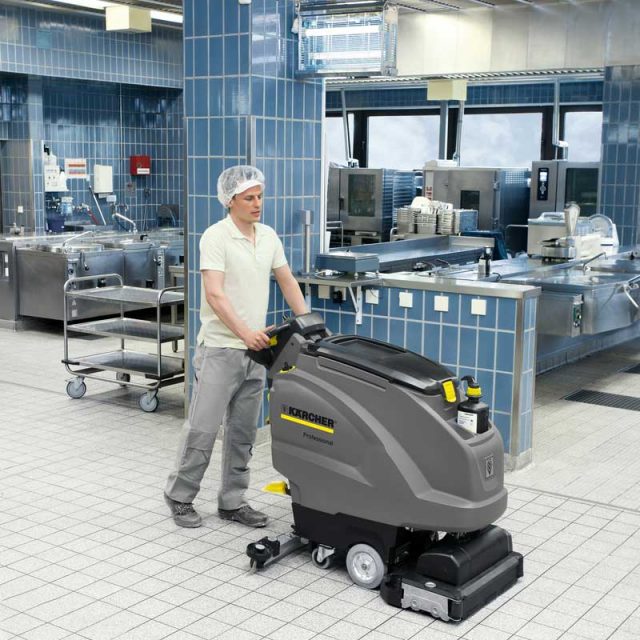
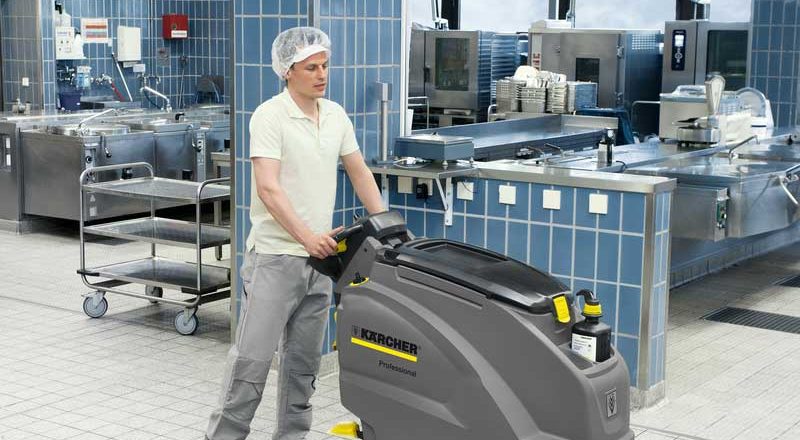
A proper floor cleaning process usually involves removing loose debris, applying a suitable degreasing detergent, scrubbing mechanically, rinsing thoroughly and allowing the surface to dry before service resumes. Scrubber dryers are commonly used because they wash and dry the floor in a single pass, reducing slip risks and minimising downtime.
We recommend: Kärcher BR 35/12 C Compact Scrubber Dryer – A compact battery-powered scrubber dryer perfect for busy commercial kitchens.
Staying compliant and inspection-ready
Most inspections aren’t failed because of one major issue. They’re failed because of repeated small problems. Missed areas, inconsistent routines and poor record keeping all add up over time. Keeping cleaning schedules visible, training staff properly and recording deep cleaning dates helps show that hygiene is part of normal operations, not a last-minute response.
Final thoughts
Commercial kitchen cleaning is about keeping on top of things. When routines are clear and the right equipment is available, hygiene becomes manageable even during busy services. Clean daily, deal with issues early, deep clean regularly and use professional equipment where manual cleaning falls short. This approach helps kitchens stay compliant, protects staff and keeps businesses running smoothly.