Best Practices for Cleaning Food Production Floors
Cleaning machines are only part of the solution. Here are some additional steps to keep your food production floors in top condition.
Develop a daily cleaning routine
Consistency is key. A quick sweep or vacuum at the start and end of each day keeps floors clear of crumbs, dust and leftover food. Not only does this make the space safer for staff, but it also means you’re never letting dirt build up to the point where it becomes harder to remove. Think of it as setting the stage for a smoother workday tomorrow.
Prevent cross-contamination
Food production spaces have different zones for a reason. Cleaning a prep area with the same mop or cloth you’ve just used in a storage room can easily transfer bacteria. Make sure each area is cleaned and disinfected with its own tools. We recommend colour-coded equipment to keep things organised and avoid any mix-ups.
Focus on busy areas
Some areas have higher footfall than others, particularly sinks and cooking stations. Spills and wear show up here faster. Placing mats or protective coverings in these spots reduces damage to the floor and makes clean-ups quicker. It’s a small step that can save time and extend the life of your flooring.
Steam clean tricky areas
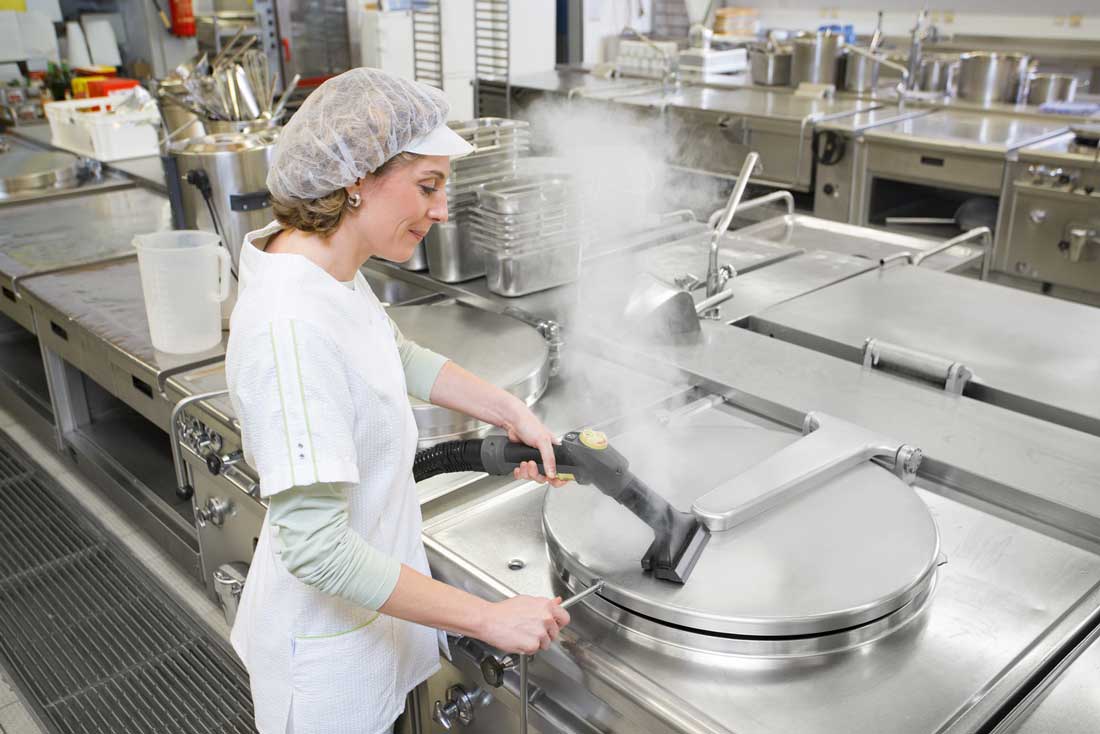
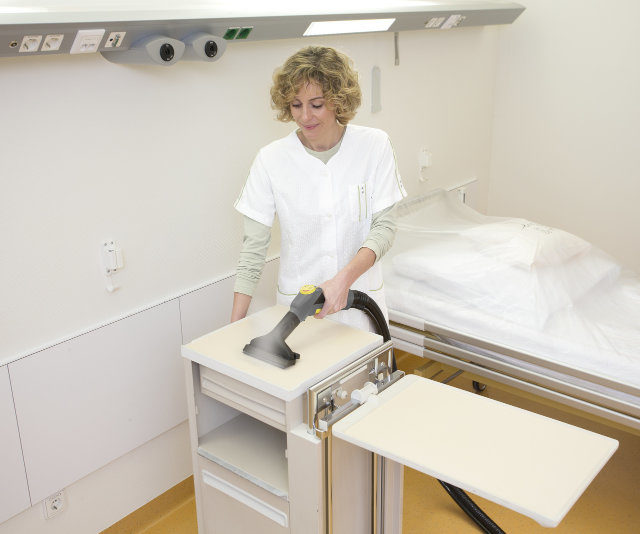
Not everything can be reached with a vacuum or scrubber. Drains, corners and narrow gaps often need extra attention. Steam cleaners are perfect for this. They blast out dirt and kill bacteria without leaving behind harsh chemical residues. It’s a fast, eco-friendly way to deal with stubborn spots that are easy to overlook.
These best practices help to maintain a safe work environment while keeping your floors in top condition.