A complete guide to school & daycare cleaning: deep cleans, hygiene & equipment

Schools, nurseries and daycare centres across Ireland carry a level of hygiene risk that most other commercial premises don't. Large numbers of children in close contact, shared surfaces, communal eating areas and busy corridors all combine to make these some of the highest-risk environments for spreading germs.

Even before the pandemic, education and childcare settings were recognised as places where cleaning standards needed to be a cut above the ordinary.

The good news is that with the right approach (and the right equipment) keeping a school or daycare centre genuinely hygienic doesn't have to be overwhelming. It comes down to understanding the difference between everyday cleaning and deep cleaning, knowing which areas carry the highest risk, and using equipment that's actually built for the job.

In this guide, we'll walk through how to build good hygiene practice into daily routines. We’ll cover why the summer break is such a valuable opportunity for a full deep clean, which areas of a school or daycare need the most attention, and which equipment suits which task – from everyday hoovering right through to end-of-term deep cleans.

Why hygiene is important for schools and daycare centres

Children move between classrooms, canteens, gyms and playgrounds throughout the day, touching everything in their path along the way. Add in the fact that young children are far more likely to put their hands to their mouths and than onto surfaces, and it's easy to see why germs spread so easily in these settings.

The pandemic brought this into sharp focus and taught us that cleaning and hygiene standards are central to managing the spread of illness. It also highlighted exactly where cleaning processes tend to break down, and why a structured, considered approach to hygiene matters far more than simply cleaning more often.

Getting this right protects pupils, staff and families. It also reduces staff and pupil absence, protects the lifespan of school facilities and equipment, and supports the reputation of the school itself, particularly at points in the year when new pupils, parents and staff are forming their first impressions.

Building a hygiene system: risk analysis and implementatio

Good hygiene in a school or daycare centre doesn't start with a mop and bucket. It starts with understanding where the actual risks lie.

Step 1: Risk analysis

The first step is carrying out a proper risk analysis. Many schools will already have done this in response to the pandemic, but it's a useful exercise to revisit regularly, particularly once the immediate pressure of any specific outbreak has eased.

Questions worth asking include:

  • How the spread of germs between children and adults can be reduced
  • Where the current cleaning process has weak spots
  • Whether the existing workload could be rebalanced so that higher-risk areas get more attention

For example, it might make sense to reduce the time spent dusting sand off floors in favour of disinfecting every desk surface daily. The goal is to identify where the current task list needs to shift based on actual risk, not habit.

A simple cleaning chart, colour-coded to show which areas need dust-binding and which need wet wiping, helps keep everyone on the same page about what needs doing and when.

Step 2: Implementation

Once the risk analysis is complete, the next stage is putting it into practice.

If a classroom needs to reopen after being closed due to an outbreak, a proper deep clean should be carried out first. This alone can eradicate the vast majority of the viruses and bacteria present. It's also worth checking the finer details of the room. Sinks, for example, need their taps and drains rinsed thoroughly, since stagnant water is itself an infection risk.

Day-to-day use matters just as much as the big deep clean. Door handles, accessible windows and cloakroom areas all need regular disinfecting, given how frequently small hands come into contact with them. 

It's equally important to choose products that don't leave a residue behind for children to pick up. Alcohol-based products dry without residue, while products containing peroxide simply decay, both of which are safer choices around young children.

Don't overlook adult spaces either. Staff rooms and kitchens, including fridges, coffee machines and vending machines, need to be part of the regular cleaning routine too.

What to clean a school with

Surface cleaning is generally best carried out with a microfibre cloth and a spray bottle of disinfectant. Many schools use colour-coded cloths, typically blue for surfaces and red for toilets, to avoid any risk of cross-contamination. 

School floors

For floors, daily cleaning should involve a vacuum cleaner fitted with a HEPA filter, which is capable of capturing and retaining microorganisms rather than just moving them around. Manual wiping is fine for picking up the thicker dust and dirt in between.

We recommend: Kärcher NT 27/1 Vacuum Cleaner


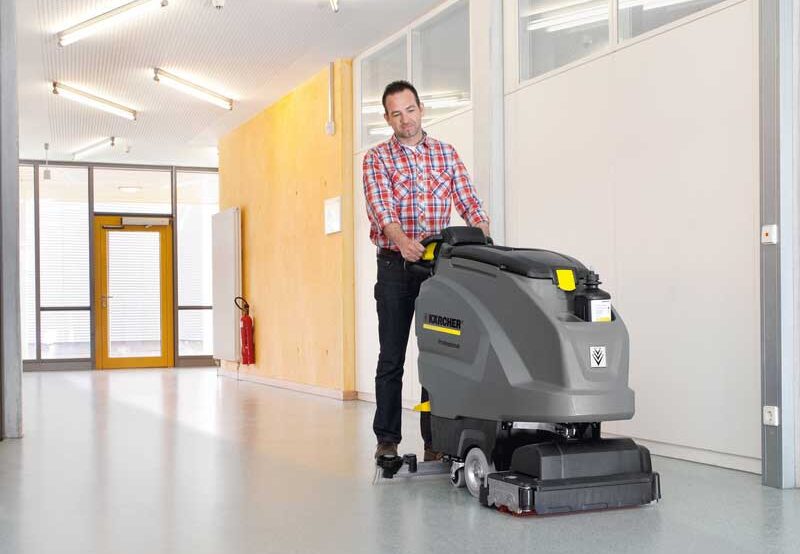
Wet floor cleaning should take place regularly in schools, but mop buckets are best avoided as they can spread pathogens from room to room. A microfibre mop cloth can be used for each individual room and replaced regularly. For larger floor areas such as sports halls and canteens, a scrubber dryer is the most effective option. It vacuums up dirty water immediately as it cleans, making it a genuinely hygienic choice for high-traffic communal spaces, and some models can be used for large-area disinfection too.

We recommend: The Kärcher BD 38/12 C Scrubber Dryer or the Kärcher B40 Pedestrian Scrubber Dryer for larger schools and spaces.

Everyday cleaning vs deep cleaning

One of the most common questions schools ask is where everyday cleaning ends and deep cleaning begins. The two aren't interchangeable, and understanding the difference helps you plan realistically throughout the year.

Everyday cleaning covers the routine tasks needed to keep a school running safely day to day: 

  • Vacuuming classrooms
  • Wiping down high-contact surfaces like door handles and desks
  • Keeping toilets and communal areas presentable


Deep cleaning goes considerably further. It targets the dirt, grease, bacteria and grime that build up over weeks or months and that everyday cleaning simply isn't designed to reach – ingrained carpet stains, grease on kitchen equipment, limescale in showers, and grime worked into gym equipment and flooring. 

This is the level of cleanliness that genuinely resets a space, and it's typically only practical to carry out when the building isn't in full daily use, which is exactly why the summer break is so valuable.

The best cleaning equipment for schools and nurseries

Different jobs around a school call for different equipment, and matching the right machine to the right task makes a real difference to both hygiene standards and how long your cleaning routine takes. Whether you’re managing a primary school, high school or a nursery, here's a practical breakdown.


Area Frequency Recommended equipment Why it works
Classroom and corridor floors Daily Kärcher NT 27/1 Vacuum Cleaner Captures fine dust and microorganisms rather than redistributing them
High-contact surfaces (desks, door handles) Daily Microfibre cloths with disinfectant spray Effective manual disinfection for small, frequently touched areas
Canteen and sports hall floors Weekly / end of week Kärcher BD 38/12 C Scrubber Dryer Cleans and picks up dirty water in one pass across large areas, ideal for high-traffic communal spaces
Gym equipment, desks, non-wooden furniture Weekly / end of term Kärcher SGV 8/5 steam cleaner Chemical-free disinfection that reaches seams and joins, suited to equipment used directly by pupils
Kitchen and canteen equipment End of term / deep clean Kärcher SGV 8/5 steam vacuum cleaner Higher capacity and reach for degreasing food preparation surfaces and equipment
Carpets and soft furnishings End of term / deep clean Puzzi 30/4 Spray-Extraction Cleaner Lifts ingrained stains and odours that vacuuming and spot cleaning can't remove
External areas, bins, playgrounds Termly / summer deep clean Kärcher Zero Emissions Hot-Water High Pressure Cleaner HDS-E 8/16-4 M Removes built-up grime, moss and staining from hard external surfaces
Toilets, changing rooms and showers Termly / summer deep clean Kärcher BD 38/12 C Scrubber Dryer or Kärcher SGV 8/5 steam vacuum cleaner Reduces limescale and disinfects tiled, high-moisture areas thoroughly
Classroom and communal room disinfection after closure or outbreak As needed Kärcher SGV 8/5 steam vacuum cleaner High-temperature steam eradicates viruses and bacteria without relying on chemicals


For everyday hoovering and surface wiping, lighter equipment does the job well and keeps routines quick. For anything classed as a deep clean, whether that's a single classroom after an outbreak or a full end-of-term reset, scrubber dryers and steam cleaners do the heavier lifting, with pressure washers and carpet extractors brought in for external areas and soft furnishings.

If you have any questions about which product might be best for your school or daycare centre, get in touch with us and our friendly team will be happy to help.

Areas to focus on during a school deep clean

A summer deep clean should prioritise the following:

  • All floor surface types, including removing carpet stains and deodorising throughout
  • Gymnasium and sports equipment, deep cleaned to improve both hygiene and lifespan
  • Food service equipment and canteen work surfaces, professionally treated to remove grease and bacteria, along with all eating areas used by pupils and staff
  • Paint, ink and chewing gum stains removed from tables, chairs and classroom furniture
  • Toilets, changing rooms and showers, where deep cleaning reduces limescale and improves hygiene in a way that everyday cleaning can't achieve
  • Classroom bookcases, fixtures and fittings, thoroughly dusted while the additional time allows for it


Why the summer holidays are the best time for a deep clean

For nurseries, primary and secondary schools across the IE, summer is genuinely the best opportunity to deep clean buildings and facilities properly. Keeping large premises clean and tidy is a demanding task at the best of times, and trying to fit deep cleaning around the hectic final days of the summer term rarely works well. The extended summer break changes that, here’s why.

Increased safety

A well-structured summer deep clean means no wet floors left behind for pupils and staff to trip on, and it ensures everyone returns to an environment that's genuinely safe to use. Beyond removing slip and trip hazards, it also means pupils and staff with asthma or dust allergies won't be greeted by a dusty atmosphere in September. 

Facilities last longer

An unclean environment attracts pests and vermin, and even a small infestation can cause real damage to electrical cables, stored paperwork and material fittings. Broken-down equipment is the last thing any school needs at the start of a new term, and it's easily preventable by extending your summer clean to storage areas as well as classrooms.

Save time and money

If equipment or facilities become unusable, lessons have to be rescheduled, putting the whole term on the back foot from day one. Regular maintenance extends the lifespan of equipment and reduces future repair costs, and tackling this as one coordinated summer job brings further benefits. 

The length of the summer break gives you the flexibility to book cleaning in at a time that suits your staff's availability, and one large-scale clean is typically far more cost-effective than several smaller appointments scattered across the year's shorter term holidays.

Appearance

A tidy school is proven to boost the productivity of both students and staff, so welcoming everyone back to a clean space sets the tone for the whole year. 

Scrubber dryer hire makes light work of scuffed flooring in canteens and sports halls, while floor buffers bring foyers and corridors up to a proper shine. Keeping on top of flooring and furniture also avoids that tired, tatty look that can creep in over time, and tends to encourage pupils to respect their environment that bit more.

Your school’s reputation is important

The start of a new term always brings fresh faces, from new Year 7 intakes to transferring pupils and new staff. Presenting a school that looks professional and well cared for matters more than it might seem. If cleaning standards are allowed to slip, it doesn't just create a poorer working environment, it can also make people question where else standards might be slipping. Future intake numbers can be affected by exactly this kind of impression.

Checking and improving your cleaning standards

Every school and daycare centre should have a way of checking that cleaning processes are actually working, and a route to make improvements when they're not.

A cleaning protocol that records what work has been completed, what couldn't be done and why, gives you a clear picture over time. Random spot checks can then confirm how effective the process has genuinely been. An ATP test is one practical way to do this, measuring the amount of adenosine triphosphate left behind by people and other living organisms to give an objective read on how clean a surface really is.

If a surface isn't reaching the required standard, or if time constraints are affecting the wider cleaning protocol, this is the point to reassess. Sometimes the right answer is to prioritise the areas that matter most and accept a slightly lighter touch elsewhere, such as focusing on windows that are touched regularly from the inside rather than spending equal time on exterior glass that receives no contact at all.

Reopening your school after an outbreak

Outbreaks of illness are an unfortunate reality of school life, and it's worth having a clear process ready for exactly this situation.

Hygiene measures need to be intensified, with thorough cleaning carried out first, followed by disinfection. Chemicals should be used for the intensive cleaning stage to ensure surfaces are properly treated. Any equipment used for floor cleaning, including spray mist systems, should only be operated by staff wearing suitable PPE, and a mask should always be worn while disinfectants are being sprayed. The room should be well ventilated and closed off from general access while this work takes place.

Where the use of chemicals needs to be avoided or minimised, steam cleaners are the best alternative. High-temperature steam, emerging at around 100 degrees Celsius, eradicates viruses and bacteria as it makes contact with surfaces. Moving the nozzle slowly and closely over the surface is the most effective technique, with around 30 seconds of steaming per area generally sufficient. Outside the building, a hot water high-pressure cleaner with steam capability can be used to clean external surfaces to the same standard.

Should you hire or buy school cleaning equipment?

For most schools, nurseries and daycare centres, hiring cleaning equipment makes far more practical sense than buying it outright. Deep cleaning equipment such as scrubber dryers, steam cleaners and pressure washers represents a significant upfront cost to purchase, along with the ongoing responsibility of servicing, maintenance and storage.

Hiring removes all of that. You get access to professional-grade equipment exactly when you need it, whether that's for a single classroom disinfection after an outbreak or a full site deep clean over the summer break, without the machine sitting unused in a cupboard for the rest of the year. Servicing and maintenance are handled for you, costs are spread in a way that's easier on budgets tied to the academic year, and you can scale the equipment you hire up or down depending on the scope of each job.

Hiring school cleaning equipment with Kärcher Hire

Every school and daycare centre wants pupils and staff to return to a premises that's genuinely clean, safe and welcoming. With the right equipment in place, that's a realistic goal rather than a summer-term scramble.

With over 30 years of experience in industrial cleaning equipment hire, Kärcher Hire supports schools and daycare centres across the IE with the equipment needed for both everyday hygiene and full deep cleans.

  • Flexible short and long-term hire options. Hire from two days to five years, so equipment is available exactly when your schedule needs it, including across the summer break.
  • Full servicing and maintenance. Our fleet is maintained to ISO 9001 standards, with servicing and breakdown support included as standard.
  • Next-day delivery across the IE. Machines arrive ready to use, delivered directly to your site, subject to location and availability.
  • Free training with every delivery. We make sure your caretaking and cleaning staff know how to operate each machine safely and effectively from day one.


If you're planning a summer deep clean or want advice on the right equipment for your school or daycare centre's everyday hygiene routine, get in touch with our team. Take a look at our full range of cleaning equipment for hire and we'll help you put together a plan that fits your premises and your budget.

School & daycare cleaning FAQs

Why is a deep clean necessary if we clean every day?

Everyday cleaning maintains a baseline standard but isn't designed to remove the dirt, grease and bacteria that build up over weeks or months in carpets, kitchen equipment, showers and gym facilities. A deep clean resets these areas properly, which is why it's typically carried out during school holidays when the building isn't in full daily use.

What's the best time of year to deep clean a school?

Summer is generally the best opportunity, thanks to the extended break giving enough time to complete a thorough clean without disrupting term-time activities. It also means pupils and staff return to a fully reset environment at the start of the new academic year.

Can steam cleaners be used safely around children?

Yes. Steam cleaning is chemical free, which makes it a particularly suitable option for schools and daycare centres, since it leaves no chemical residue on surfaces, desks or equipment that children come into contact with.

Is it cheaper to hire or buy cleaning equipment for a school?

For most schools, hiring works out more cost-effective than buying. It avoids the upfront cost of purchasing equipment outright, includes servicing and maintenance as standard, and allows you to scale up for a summer deep clean without paying to store and maintain machinery for the rest of the year.

Kärcher Hire

At Kärcher Hire success is built upon our friendly and knowledgeable team who are committed to delivering superior high standards of service, training and advice. As recognised Kärcher specialists, we pride ourselves in being able to offer a Next Day Delivery service to many parts of Ireland. So, what else are you waiting for? If you’re interested in joining the many others and becoming part of the Kärcher Hire revolution, make sure you get in touch with our friendly and experienced team today.

We provide a quick and reliable delivery service throughout the country by our own modern fleet of Mercedes Sprinter delivery vehicles. Additionally, we also perform a full demonstration of every machine that we deliver and only leave your site when you and your team are completely happy with the equipment. We even ask your team to score our driver/demonstrator on how well our handover was performed.

FREE QUOTE

For a free and quick quote simply enter your details below and we'll get back to you with prices, advice & recommendations.