A spotless-looking commercial space and a genuinely hygienic one aren't always the same thing. Wherever standards have to stay high, the dirt on show is rarely the real issue. The bacteria, allergens and built-up grease hiding below the surface tend to do the damage, and these are precisely the things a mop or cloth pushes around instead of clearing away.
Steam cleaning takes a different approach. Rather than leaning on detergents, it puts heat to work, loosening grime, breaking down grease and destroying bacteria as it passes over a surface. That makes it a strong fit for workplaces, food areas, care settings, leisure facilities, vehicles and anywhere a thorough, sanitary finish counts. Below we look at the mechanics behind it, what you stand to gain, the settings it suits and why renting tends to make the most sense.
What is steam cleaning?
At its core, steam cleaning applies hot, pressurised vapour to clean and sanitise in one go. There's no scrubbing with chemical products involved. Instead, the steam softens dirt and melts away grease, while the temperature wipes out bacteria and other contaminants the moment it touches them.
It handles a broad mix of hard surfaces well, from worktops and flooring to tiling, sanitary fittings and kitchen zones. One thing often gets muddled, so it's worth flagging now: steam cleaners and carpet cleaners are not interchangeable. A carpet extractor pushes water and solution into the pile, then pulls the dirty mixture back out, whereas a steam cleaner works through heat and a low-moisture vapour. Each has its uses, but the way they operate is entirely different.
How does steam cleaning actually work?
Within the machine, a boiler raises water far past its boiling point, to roughly 115 degrees Celsius. At that temperature the water becomes pressurised steam, which is pushed out through an attachment as a fine, low-moisture vapour. When that vapour meets a surface, it works its way in and lifts away dirt, grease, mould, marks and pathogens.
Since there's so little moisture involved, surfaces dry off rapidly and you rarely need to go back over them with a cloth. Quick drying brings another bonus, too, cutting the chance of mould taking hold in spots prone to damp such as toilets and kitchens. Professional units also draw from a direct water feed that tops the tank up on its own, so the work doesn't keep grinding to a halt.
What are the benefits of steam cleaning?
A clean-looking surface is only the start. For a business, steam can trim costs, lift hygiene standards and make the whole cleaning routine run more smoothly.
No chemicals required
Because heat does the heavy lifting, you can leave the harsh products behind. That brings down your spend on consumables, takes away the hassle of storing and handling hazardous items, and means nothing toxic is left sitting on the surface afterwards. It's especially valuable around children, in food-prep areas and anywhere chemical contact is best avoided.
Better hygiene
This goes well past shifting what you can see. The intense heat kills bacteria and clears contaminants, which matters enormously where there's no room to compromise. Kärcher steam cleaners clear up to 99.999% of viruses, including Covid and influenza, from hard surfaces, helping cut the spread of illness between staff and visitors.
Less time, less labour
A single control covering every function, paired with short heat-up times, lets your team move through jobs quicker and ditch the endless scrubbing. Tallied up across a year, those gains translate into real savings in staff hours.
A greener choice
Minimal water and zero chemicals make this a properly sustainable option. Just one litre of tap water turns into around 1,700 litres of steam, roughly 20 minutes of cleaning, and the only power drawn is while the water is heating. The vapour also pulls dust together rather than flinging it into the air, leaving the space healthier for anyone who suffers with allergies.
Does steam cleaning disinfect?
Steam both cleans and sanitises, which is a big reason it's relied on so heavily where hygiene can't slip.
The two terms aren't identical, mind. Sanitising brings germ levels down to a safe point, whereas disinfecting goes further and targets near-total removal of bacteria and viruses. Steam cleaners sanitise to a high standard, especially when dry steam is applied at heat, and Kärcher units are verified to strip up to 99.999% of viruses from hard surfaces. Keeping premises clean in this way safeguards your people, helps keep absence down and reassures the customers walking through your door. If steam can be trusted to keep clinical spaces hygienic, a busy commercial site holds no fear.
Where steam cleaners work best
Steam earns its keep across plenty of commercial and industrial settings. A few where it really shines:
Offices and workplaces
Great for freshening up carpets and soft furnishings, sanitising shared spaces and dealing with the washrooms and kitchens where germs gather, all of which supports a tidier, healthier place to work.
Food production and commercial kitchens
Steam slices through grease and food debris while sanitising as it goes, getting into the seals, edges and tiling that harbour bacteria, with none of the chemicals you'd rather keep away from food.
Healthcare and care settings
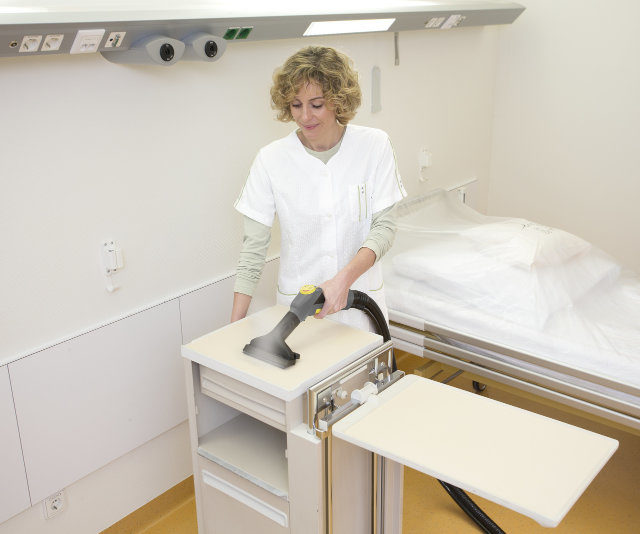
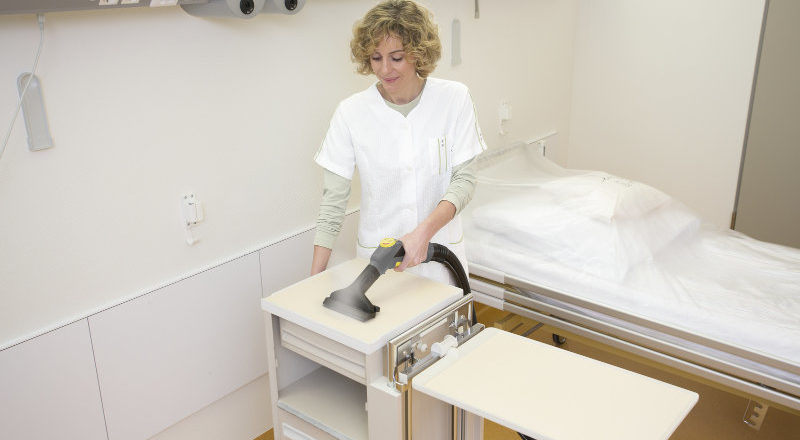
Its knack for clearing the vast bulk of viruses and bacteria, plus a chemical-free method, makes it well suited to places where patients, residents and staff may react to cleaning products.
Gyms and leisure facilities
Showers, changing areas, poolsides and tiled surfaces all gain from it, with the mix of heat and fast drying keeping bacteria in check across damp, high-traffic spots.
Car valeting and automotive
A blast of hot vapour shifts stubborn grime without chemicals and treats paintwork more kindly than cloths or sponges, while the attachments reach into vents, footwells and seating.
Retail and hospitality
Steam keeps flooring, tiling and surfaces looking sharp, with a streak-free result and quick drying that make it easy to fit around opening hours.
The Kärcher SGV 8/5 steam vacuum cleaner
For commercial work, the model we hire out is the Kärcher SGV 8/5 steam vacuum cleaner. It pairs steaming with a built-in vacuum, so it lifts dirt and pulls away moisture in the same motion, leaving everything clean and dry behind you.
A five-litre tank means fewer stops to refill, while the four-metre suction hose lets you get to tricky corners without dragging the machine around. It's ready to go within a few minutes of heating, and one control handles every function, making it convenient for most businesses.
Should you hire or buy a steam cleaner?
It really hinges on how regularly you'll reach for it and how much your needs shift over time. Buying one outright can run into thousands of euro before you add servicing and upkeep, which can stack up to a sound investment for businesses with steady, year-round demand.
For everyone else, hiring usually wins on flexibility and cost. You get a professional machine with nothing big to pay upfront, servicing and maintenance generally come included, and you can dial things up or down whenever your workload changes. It's the sensible call for seasonal deep cleans, one-off resets, peak periods and short-term projects, and it lets you put a machine through its paces before deciding to buy.
Hiring a steam cleaner with Kärcher Hire Ireland
Backed by more than 30 years in industrial cleaning equipment hire, Kärcher Hire makes getting hold of professional-grade kit simple. Whether it's a single deep clean or an ongoing routine, we'll tailor a rental to suit your site, and free training comes with every delivery so your team is confident and safe from the off.
Not sure which way to go? Our team can talk you through a practical solution. Browse our steam cleaner hire range and get in touch to chat through what you need.
Steam cleaner FAQs
What is a steam cleaner used for?
It deep cleans and sanitises hard surfaces with hot, pressurised vapour in place of chemicals. That covers flooring, tiles, kitchens, washrooms, upholstery and vehicles, and it's a staple across offices, healthcare, food production, gyms, retail and automotive work.
Does steam cleaning kill germs?
It does. The heat of the steam destroys bacteria and clears contaminants on contact, and Kärcher steam cleaners remove up to 99.999% of viruses such as Covid and influenza from hard surfaces.
Do you need chemicals to use a steam cleaner?
Not usually. The process runs on heat rather than detergents, so chemicals are rarely needed, which makes it cheaper to run, kinder to air quality and better for the environment.
Can steam cleaners be used on all surfaces?
Most hard surfaces are fine, including sealed floors, tiles, worktops and kitchen areas. Steer clear of untreated wood, unsealed concrete and delicate fabrics unless the maker says otherwise, and always test laminate on a small patch first.
Do I need training to use a steam cleaner?
A short run-through is normally plenty. Hire with Kärcher Hire Ireland and we include free training with every delivery, so your team is ready to go safely from day one.